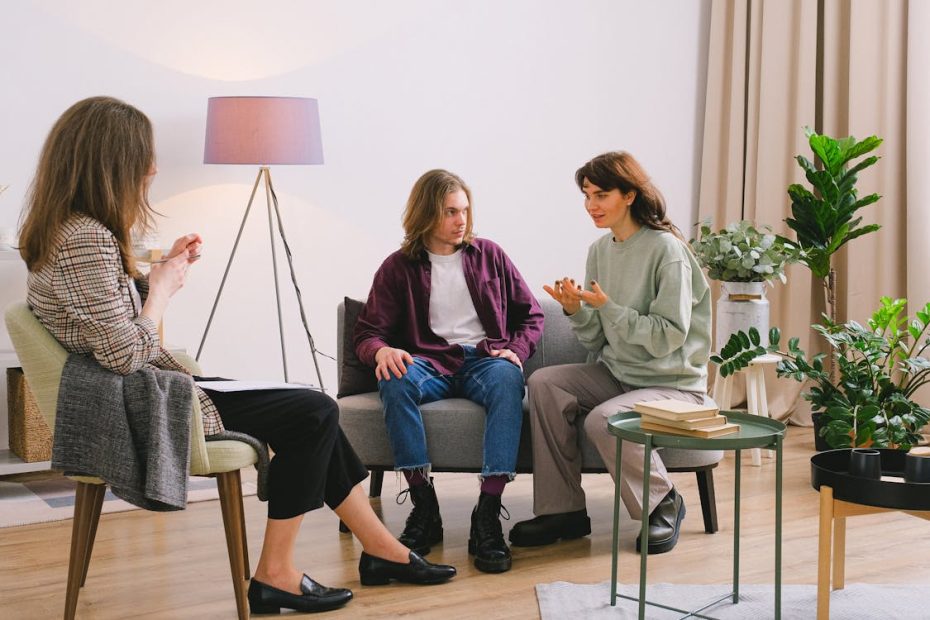
Every relationship goes through phases. There are moments of enchantment, discoveries, plans, shared dreams… But there are also challenges: the wear and tear of everyday life, communication that begins to fail, accumulated resentments, differences that once seemed small and that suddenly take on gigantic proportions.
If you've ever caught yourself thinking:
“Is it still worth it?” ou “Why do we fight so much over silly things?”, know that you are not alone. And more than that: This doesn't mean your relationship is over. It may simply mean it's time to seek help.
This is where couples therapy comes in. And no, it’s not just for couples “in terminal crisis,” as many people still believe. In fact, it’s a powerful tool for collective self-care — yes, taking care of your relationship is also a way of taking care of yourself.
🚦 When is it Time to Seek Couples Therapy?
The truth is simple and, at the same time, uncomfortable: there is no universal "right moment." The right moment is when you realize that, on your own, you can no longer break free from the repeating cycle.
🔥 Signs that it may be time to seek help:
-
Constant discussions, often on the same topics;
-
Long silences and emotional disconnection;
-
Feeling like they are housemates and no longer a couple;
-
Difficulty in understanding each other, even with love present;
-
Accumulation of hurts, resentments and unhealed wounds;
-
Excessive jealousy, lack of trust or episodes of betrayal (emotional or physical);
-
Misalignment of plans, values or expectations about the future;
-
Crises after major changes (birth of children, moving to a new city, job loss, etc.).
👉 Spoiler alert: you don't need to wait until your relationship is on the verge of collapse to seek help. Healthy couples also go to therapy — and become even stronger.
🧠❤️ Couples Therapy Is Not About Blaming. It's About Understanding.
There is a very common fear, especially among men (but not only):
“What if therapy becomes a court? What if I am judged, accused, massacred there?”
The answer is simple: no, couples therapy isn't about assigning blame. It's about creating a safe space where both partners can understand how they contributed—consciously or unconsciously—to what they're experiencing. And, more importantly, discover together how to rebuild.
The therapist is not there to decide who is right or wrong, but to help untangle the knots. Because, often, we don't even know how the ties got so tangled.
🎯 What Happens in Practice in Couples Therapy?
If you've never done it, you might imagine a tense scenario, crossed glances, accusations... But, in practice, it's quite different — and often surprising.
🛋️ It works something like this:
-
Acceptance: The therapist listens to how each person perceives the relationship, the problems, and the pain.
-
Mapping: Together, they build a clear vision of the dynamics at play.
-
Communication: They learn to speak — and, above all, to listen — in a non-violent way.
-
Tools: The couple receives practical guidance, reflections, and exercises that help in their daily lives.
-
Rebuilding or conscious parting: Not every couple stays together after therapy, but when separation happens, it tends to be healthier, more conscious, and less traumatic.
🔥 Truths That Few People Tell About Couples Therapy

✨ 1. Many Crises Are the Result of Communication Problems — Not a Lack of Love.
It seems simple, but it's revolutionary to realize this. Often, you're not fighting because you don't love each other, but because you no longer know how to communicate effectively.
✨ 2. It's More About Listening Than Being Right.
In therapy, the goal is not to “win” an argument, but to understand what is behind what the other person feels and says.
✨ 3. You will discover things about yourself that you never imagined.
Believe me: when you talk about relationships, you see yourself. Your wounds, patterns, traumas and even behaviors that you swore you would never have — often inherited from your own family history.
✨ 4. It takes work. And it yields results.
There is no magic. But there is commitment. And those who commit, reap.
💡 What if the Other Person Doesn't Want to Do Therapy?
This is a very common dilemma. Sometimes one partner recognizes that they need help, but the other resists. And yes, this happens quite often.
In these cases, you can indeed start on your own. Individual therapy helps you understand your own patterns, your limits, and even communicate in a way that often ends up inspiring the other person to participate in the process.
👉 Powerful phrase:
“Sometimes when one changes, the entire dynamic changes with it.”
(I.e. Myths About Couples Therapy That Need to Bust Now
-
❌ “Those who love don’t need therapy.”
➡️ In fact, those who love, care. And therapy is care. -
❌ “It’s just talk, it doesn’t solve anything.”
➡️ Solving something isn’t magic. But when you change the way you look and talk, everything changes. -
❌ “If we need therapy, it’s over.”
➡️ Wrong. Therapy is not the end. Often, it is the beginning again.
🌈 Benefits of Couples Therapy — Far Beyond the Crisis
-
Improved communication;
-
Increased empathy and understanding;
-
Rescue of emotional connection and intimacy;
-
Conflict reduction;
-
Building healthy and fair agreements for both parties;
-
Learning tools that strengthen long-term relationships.
👉 And yes, it also improves your sex life, because when the emotional connection strengthens, physical intimacy follows.
✨ Couples Therapy Is Not About Saving Your Relationship. It's About Saving Your Emotional Health.
It sounds heavy, right? But it's liberating to understand this. Therapy is not a formula to ensure that you stay together. It's a path to ensuring that, together or not, you can live in a lighter, more respectful and healthier way.
And you know what's most beautiful? Most of the time, when both are committed, the love not only survives—it is reborn.
🔥 Phrases You'll Hear a Lot in Therapy (And That Can Change Everything):
-
“Are you listening to understand or to respond?”
-
“The problem is not you, nor him. The problem is the dynamic you have built.”
-
“The other person is not obligated to meet all your emotional needs.”
-
“If it is not clear to the giver, it is also not clear to the receiver.”
-
“Love does not mean agreeing with everything.”
🧭 Conclusion: Love Is Also A Choice — And Therapy Is A Tool To Take Care Of That Choice
Relationships don't sustain themselves. They need to be nurtured, cared for, and updated. Just as we service a car, as we take care of our physical health, taking care of love is also a commitment.
If you are going through a difficult time, know this: it's not a sign of weakness. It's a sign of humanity. And it's absolutely possible to rebuild. Couples therapy is an opportunity to find new meaning, heal, and grow. To reconnect not only with each other, but with yourself.