
🧠 Is your brain sabotaging you? Spoiler: yes — and it does it all the time
How many times have you found yourself saying “I’ll just take a quick look” and, 15 minutes later, you’re leaving the store (or the app) with a bag, a debt or a bill that you can pay in 10 interest-free installments? Don’t worry: you’re not alone — and, in fact, you’re being driven by invisible forces that live in your own brain.
Behavioral economics studies precisely this curious phenomenon: why, even knowing that we should save, do we continue to spend—and often spend poorly? What makes us make irrational decisions with our money, even when we have all the information to do the opposite?
In this article, we will explore this topic in a light-hearted way, with fun examples and, of course, that hint of self-irony that every compulsive consumer understands well. Get ready to laugh, reflect… and maybe understand why that “free shipping” cost you R$300.
💳 The Illusion of Rationality: The Myth of the Logical Consumer
Classical economists believed that human beings made logical decisions, analyzed costs and benefits, and always chose what was best for them. Poor classical economists.
Behavioral economics has come to dismantle this fantasy. Daniel Kahneman and Amos Tversky, two of the most influential names in this field, have shown that our brain is far from being a rational calculator. In fact, it is lazy, emotional, and easily deceived.
For example, why do we prefer to pay R$99,90 instead of R$100? Because the number "seems smaller." This is called the anchoring effect . The difference is symbolic, but the psychological impact is real. Marketing knows this—and uses it mercilessly.
🍕 The immediate reward trap
Your brain loves rewards—and it wants them all now. That’s one explanation for that classic “I deserve it” feeling after a hard day. The problem is that this impulse sabotages long-term planning.
This is called hyperbolic discounting : we prefer a small reward now to a large one in the future. That's why it's so difficult to save money for retirement, but so easy to spend on delivery or cashback.
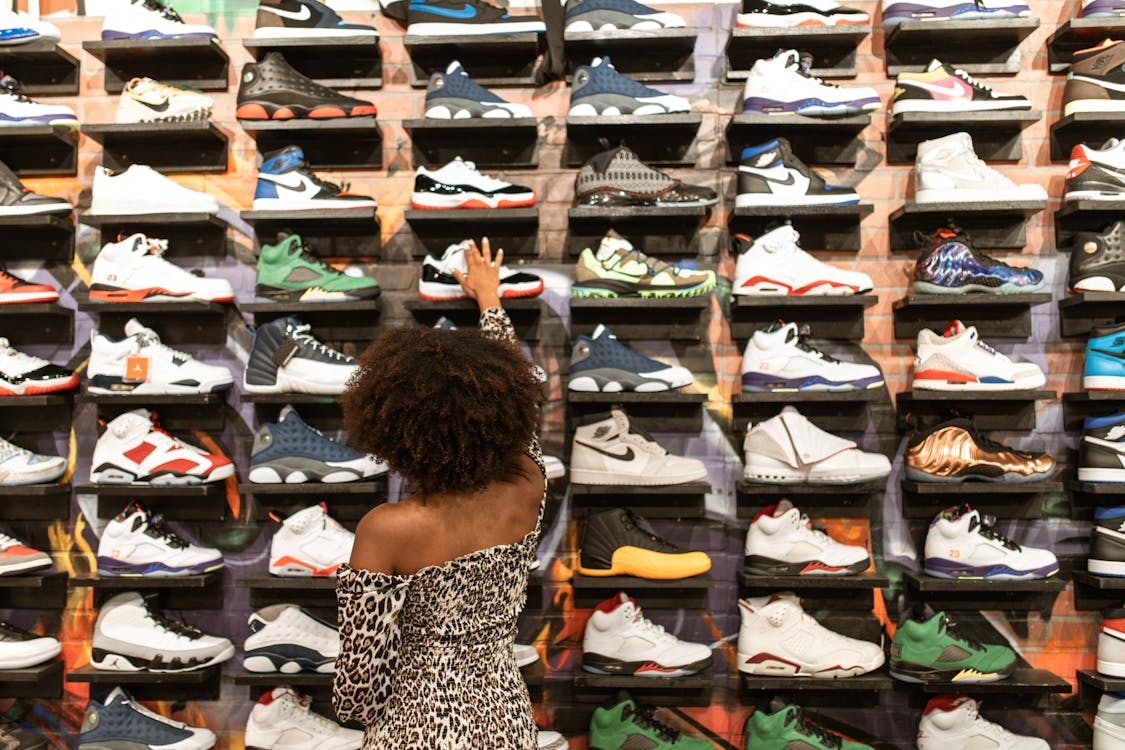
When you choose to buy a new pair of sneakers instead of saving them for a trip, it’s not because you’re being irresponsible. It’s your brain getting a dopamine rush from the immediate pleasure.
🧁 Promotions that don't make sense (but we still fall for them)
Imagine the following scenario: you are going to buy an item that costs R$200, but you discover that if you walk 10 minutes to another store, it is R$150. Will you go?
Now, imagine that you are going to buy an item that costs R$3.000 and, in another store, the same product is R$2.950. Is it still 10 minutes?
Most people say "yes" in the first case and "no" in the second — even though the savings are the same (R$ 50). This happens because our perception of value is relative, not absolute. In other words: the discount seems greater when the price is lower.
That’s why “50% off” promotions work, even if the final price isn’t necessarily a good deal.
🧠 System 1 vs. System 2: The Mental Battle That Defines Your Bank Statement
Kahneman, in his book Thinking, Fast and Slow , explains that our brain operates in two modes:
-
System 1 : fast, emotional, automatic. Ideal for escaping a tiger. Terrible for dealing with credit cards.
-
System 2 : slow, logical, analytical. Great for budget planning. Too bad it's so tedious to use.
When we’re tired, stressed, or distracted (or all of the above), System 1 takes over—and our financial decisions go out the window. Buying an expensive course on impulse? Blame System 1. Subscribing to three streaming platforms and not using any of them? System 1, again.
📱 The architecture of temptation: when e-commerce knows more about you than you do
Online shopping platforms are true masterpieces of applied behavioral psychology. Every button, color, and product placement has been exhaustively tested to stimulate your impulsivity.
Here are some classic examples:
-
"Buy now with 1 click" – reduces the chance of regret because it eliminates rational steps.
-
Countdown timers – create an artificial sense of urgency.
-
"Almost depleted" inventory triggers the fear of losing out.
-
Testimonials from other buyers – activate the social proof trigger.
You think you are choosing freely, but in practice you are being guided as if through an invisible maze.
💥 The Diderot effect: the eternal cycle of chain consumption
You buy a new shirt. Suddenly, your jeans don’t match anymore. So you buy a new pair of pants. Now your sneakers look old. You buy a new pair. Soon, your backpack looks like a mismatch for your new stylish self — and the cycle goes on and on.
This phenomenon is called the Diderot Effect , named after the philosopher Denis Diderot, who described how a simple purchase generated a series of other unnecessary ones. Instead of solving one problem, it created another: that of constant dissatisfaction.
🧠 The pleasure of spending… on others
Have you noticed how the feeling of "earning" money (like cashback, miles, or discount coupons) makes us spend more? This is called mentally labeled money . In other words, you spend more easily on something that you feel didn't come from your own pocket.
This is one of the reasons why bonuses, tax refunds, and even corporate gifts become easy targets for impulse purchases. The brain thinks: "It's not like it's really my money..."
Spoiler: yes it is.
💼 Post-purchase rationalization: honest lies we tell ourselves
After buying something expensive or superfluous, we enter a mental process called cognitive dissonance . It's the discomfort between "I know I didn't need this" and "I bought it anyway."
The solution? Create justifications that make the purchase seem logical:
-
“It was expensive, but it’s good quality.”
-
“I'm going to use it a lot.”
-
“It was an investment.”
-
“It was on sale.”
-
“I deserve it.”
This rationalization protects us from guilt — but it also keeps us in the cycle of irrational consumption.
📊 Behavioral curiosities to share on social media (and make your followers reflect)
-
People spend up to 30% more with credit cards than with cash — simply because "it doesn't hurt".
-
The brain releases dopamine even before the purchase , just by visualizing the item.
-
The simple act of "adding to cart" already generates pleasure , even without completing the purchase.
-
Delivery apps intentionally use warm colors because they increase appetite and the feeling of urgency.
-
People tend to spend more when they are sad . Consumption is used as a form of emotional regulation.
🧠 How to outwit the spending brain: tactics to resist internal sabotage
Yes, the brain is a saboteur. But it is also trainable. Here are some simple (and effective) strategies:
-
48-hour waiting list : Want to buy something? Wait two days. If it still makes sense, go ahead.
-
Avoid tempting environments : uninstall shopping apps, turn off notifications, and avoid newsletters.
-
Use physical cash for smaller purchases : you feel the impact more and spend less.
-
Set visual financial goals : seeing your progress helps the brain understand long-term satisfaction.
-
Have a standard "no" : instead of thinking "can I buy this?", ask "does this move me further away from or closer to my goals?"
✨ Conclusion: when spending less is an act of conscience (and not sacrifice)
Understanding the tricks of the human mind is the first step to regaining control of your finances. Behavioral economics isn't here to blame you—it's here to free you from guilt.
No one is 100% rational all the time. But by recognizing mental shortcuts, you can start to make more informed choices. And maybe the next time you see that “last unit available” you can smile and say, “I know what you’re trying to do… and it’s not going to work today.”