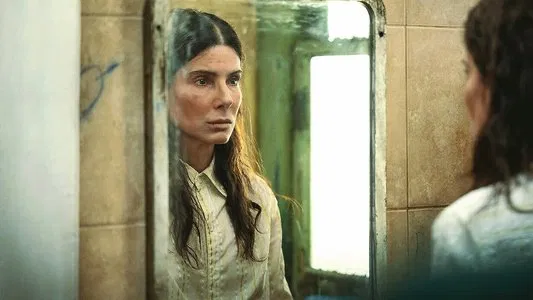
At first glance, Imperdonable ( The Unforgivable , in English) may seem like just another crime drama among many that appear in the Netflix catalog. But just a few minutes of screen time is enough to notice that there is much more in play than the cliché of an ex-convict trying to get her life back on track. Starring Sandra Bullock in a challenging role full of contained pain, the film offers an intense narrative, where the weight of the past resuenas in every silence, and where the true crime is not only the one that was committed, but the one that society decides will never forgive.
Released in 2021, the film is an adaptation of the British miniseries Unforgiven (2009), directed by Nora Fingscheidt. Here, the journey is less about the mystery of what happened and more about how someone tries to survive emotionally in a life where there is no space for the oblivion — not even after having paid their debt to the justice system.
Let's delve deeper into the successes, weaknesses and emotional impact that Imperdonable provokes — or intends to provoke — with a story that is both silent and uncomfortable.
When silence screams more than words
From the first scenes we know Ruth Slater (Sandra Bullock), a woman who left prison after serving 20 years for a violent crime: the murder of a police officer. But no sale to celebrate your freedom. He's looking for something — or even better, for someone — that he was taken by decades ago: his little sister, Katie.
The film relies on silence to build its story. Ruth is not a woman with many words. His eyes, his rigid posture, his tense expressions say much more than any dialogue. And this is one of the greatest achievements of the work: relying on interpretative strength and subtext, instead of explaining everything in words.
But this silence is not just narrative. It is also thematic. Talk about everyone who falls trapped inside someone who lives a pain without a name. From there I carry a label (police report) that erases everything I saw before or after the error.
Sandra Bullock like you've never seen her before
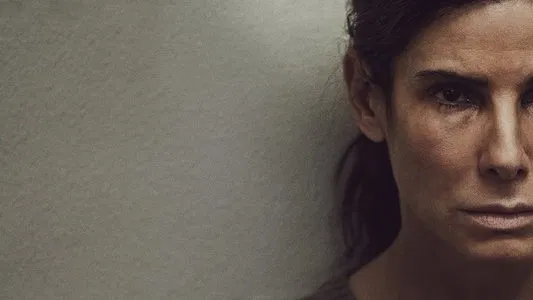
Used to lighter roles or dramas with hopeful redemptions, Sandra Bullock surprises playing Ruth with a harsh cold. His performance is completely devoid of his usual charisma. Here you are not looking for sympathy. Don't want to fall well. It simply exists —rota, closed, raw.
The actress's face, without makeup, hardened by time, reinforces the realism of history. Your Ruth is a woman who does not ask for compassion, but for dignity. Who knows that you will never be heard, but still insists. And try it again. Once and again.
It's a valuable interpretation that dismantles the star's image to give way to an uncomfortable character — exactly how Ruth Slater should be.
Society also punishes after it is condemned
The film poses an essential question: does justice end when the sentence is served? Imperdonable shows how difficult it is to reinsert yourself into society after leaving prison — especially if the crime committed was to kill a police officer, a symbol of law and public protection.
Ruth on the ground faces her sister's absence or the trauma of the past. It is also burdened by the constant rejection of a society that continues to judge it. When it comes to looking for work, finding a room or approaching your sister adopted by another family, you are always seen as a threat.
The script aims to show how social justice can be as ruthless as it is legal. At every step, Ruth is reminded that, to the world, she will never be an outcast. It will be “the one who killed a police officer”.
And that leaves us with an uncomfortable reflection: does regret have any value in a society that doesn't believe in forgiveness?
The tension increases subtly but constantly
Although it is classified as a drama, Imperdonable has moments of suspense typical of a thriller. The parallel plot that involves murdered police officers, now adults and desiring revenge, adds effective psychological tension. These characters — also trapped in the past — remember that the pain is not exclusive to the protagonist.
Nora Fingscheidt's management handles these moments with sobriety. Nothing is exaggerated or melodramatic. Violence, when it appears, is brief, subtle and disturbing. But the real emotional blow is in the silences, in the closed doors, in the elusive gazes, in the memories that are hidden.
This contained rhythm can frustrate those looking for explosive turns or easy emotions. But for those who appreciate a film that whispers instead of screams, the film offers a profound and heartbreaking experience.
When the truth is revealed, everything changes
Without revealing spoilers, it is important to decide that the film holds a fundamental secret — something that redefines the crime committed by Ruth. When the truth finally comes out, the viewer is forced to reinterpret his entire story. This is not a Hollywood-style sensationalist spin. It's more like a change of perspective. A reminder that, behind every story, there are untold layers.
This moment gives depth to the script, humanizes the protagonist even more and forces us to question how many truths we prefer to ignore out of convenience, harming fear by looking at the pain of others.
Technical aspects that enhance the report
The photography reinforces the dark and introspective atmosphere. The scenes are cold, gray, not very welcoming — as if the world had also rejected Ruth. The closed planes on Bullock's face intensify the sensation of closure. The music, discreet and melancholy, appears only when necessary, without manipulating the spectator's emotion.
The setup is clean, sober, without artificials. Some will see it as a lack of audacity; others, as I respect the realistic tone of the narrative. In any case, it is consistent with the film's approach: direct, raw, sincere.
Is it worth seeing?
Unperdonable is not an easy film. Nor do you intend to be so. It's one of those stories that bother you, that leave a silence behind the credits, that leave more questions than answers. It does not offer complete redemption or compliant finales. But it offers something rare: empathy.
Ruth Slater's journey is not about returning to who she was. Try to survive rejection, guilt, silence. To insist, even knowing that no one wants to listen to it.
If you are looking for a human drama, honest and capable of reflecting —on the ground about the penitentiary system, only about forgiveness, reinsertion and social justice— Imperdonable is a powerful choice.